Wednesday, June 10, 2009

Jessica Simpson's Reality Show and the Problem When Stars Speak Out About Body Image

According to Us magazine, Jessica Simpson is now pitching a reality television show--tentatively titled "The Price of Beauty"--based on all the heat she has taken for her weight gain.

Her larger size first made headlines in January and the story was just resurrected for the June issue of Vanity Fair, in which oh-so-observant writer Rich Cohen asserted that "her extra pounds had gone back to wherever they came from, existing only in a few dated pictures on the Internet. Jessica was skinny again, in dark pants, velvety coat, and high heels." Ugh.

And therein lies the problem with most celebrity attempts to promote positive body image. Sure, they can talk about self-acceptance and authenticity. But to get a platform, they have to get thin first. They have to prove that they are still attractive (by Hollywood's ridiculous standards) and bankable before they can go out and talk to fans about how important it is to just be healthy and be yourself. It's a pattern we've seen before.

1. Jennifer Love Hewitt was the target of tabloid photographers, who published unflattering photos of her in a bikini. Her public response was to tell the world how outraged she was that girls everywhere were struggling with their body image--and to reassure everyone that she was an itty bitty SIZE 2! A few months later, she appeared on the cover of Us to talk about how she "lost 18 pounds in 10 weeks!"

2. Tyra Banks also found herself the victim of swimsuit snark, so she went on her show to tell those haters to "kiss her fat ass." She just happened to be wearing the same exact swimsuit she was photographed in, simultaneously making the case that her ass was nowhere near fat.

3. Debra Messing was on the January cover of Shape magazine. In the article, she candidly discussed how awful it was to have to deal with the pressure to lose weight right after she gave birth to her son.

"It was written about in the tabloids a lot...On one page it showed all the actresses who got skinny in six weeks or less, and on the other page was me! I was so depressed and frustrated."

Messing tried to shed the pounds quickly, but the stress of working out constantly was too much. So she went with a slow and steady approach and took the weight off over three years. That does sound very reasonable, but lets' not forget the context. The cover line reads: "Debra Messing: How I lost 42 pounds." To the left: "Weight Loss Made Easy!" Above it: "Slim Down Special" Below it: "Get Firm and Sexy in 28 Days."

Stars are often forced to play this weighting game to stay on top of their game. And that makes it very, very difficult to walk the positive body image talk if they want to keep walking the red carpet. Will Jessica Simpson's show break the mold? I'll set my DVR and wait to find out.

via "Body Image and Reality TV" [You'd Be So Pretty If...]

Related:

"Jessica Simpson Working on a New Reality Show" [Us]

"The Jessica Simpson Question" [Vanity Fair]

"J. Love Loves Her Size 2 Body. Hear That, Word? She's a Size 2!"

"Jennifer Love Hewitt: Oh, the Hypocrisy"

"Tyra Addresses Unflattering Bathing Suit Photos [YouTube]

"Up Close With Debra Messing" [Shape]

Tuesday, June 9, 2009

Myths About Eating Disorders: Sufferers are "Vain" and "Superficial"

This weekend my post about "pregorexia" and pregnancy weight gain guidelines ran on the homepage of Shine, prompting a steady stream of comments that reinforced how much confusion still swirls around the topic eating disorders. A few commenters dared to admit that their issues are serious enough that they don't want to get pregnant and face inevitable body changes. Responses to these confessions were filled with anger:

"Get off your high horse and start valuing what really matters in life--and it's not your looks!" wrote one commenter.

"Wow these shallow snotty little brats with no concept of reality or any sort of decency...They would rather pass up the miracle of motherhood than risk any damage to their young bodies(that I am sure have flaws but we wont mention those)last laughs on you! Your going to get OLD LOL have fun with that nutcases! Maybe you will miss out on being a mother you dont deserve to have a gentle spirit in your care anyway" another chimed in.

There was talk about self-centered skinny bitches, too.

Oy. Those who live with an intense fear of weight gain are not shallow nutcases. They are our friends, our family members, our colleagues. They did not choose to be trapped by thoughts that they will never be thin enough or good enough. And the reasons they have arrived at those skewed beliefs are complex, varied, and deeply rooted. They can't just "shake it off" or "come to their senses," but they can seek help and begin the process of getting healthier.

It is true that people who are obsessed with food and weight often say and do exasperating things (believe me, I've said and done my share in the past). As hard as it can be, we have to remember that their words and actions come from a place of illness. Judgment and harsh reprimands won't encourage anyone toward a place of health. Compassion and persistence will.

More:
National Eating Disorders Association: Information for Family and Friends

Monday, June 8, 2009

Model-made Documentary 'Picture Me' Reveals the Shady Side of the Fashion Industry

Model Sara Ziff and her then-boyfriend Ole Schell started filming a video diary a few years ago. As their interviews with other models, designers and fashion insiders began to reveal some ugly truths about the industry, they decided to turn their footage into a feature. Picture Me is now making the rounds on the festival circuit and is picking up a lot of buzz along the way.

In an interview with The Guardian, Ziff explains that young, aspiring models are caught up in a system where intense competition combined with a lack of support and supervision creates a recipe for exploitation. "Vulnerable girls are being put into a potentially predatory environment," says Ziff. "What's in the agency's interest is not always best for the girl, and if she's in a compromising situation, she doesn't necessarily have anyone to turn to."

In one scene of the film, model Sena Cech desribes her experience of being coerced to perform a sex act on a photographer. According to Ziff, these incidents are rampant in the industry. Unfortunately, they are rarely discussed.

"It doesn't happen in front of anyone. It happens in the dark recesses," she says. "Pretty much every girl I have talked to has a story like it, but no one talks about it. It's all under the radar because people are embarrassed and because the people in the industry who are doing these things are much more powerful, and the model is totally disposable. She could be gone in two years."

Unlike actors, models do not have the protection of a union. Sure, there are still plenty of shady goings-on in Hollywood casting offices. But there also strict on-the-job regulations for child actors. Even though a 14-year-old model might be treated like she's older, she is still a child.

"Sara Ziff talks to Louise France about the world of teen modelling" [Guardian]
"Model/Actress Ponderings"

Wednesday, June 3, 2009

From "Pregorexia" to Pregnancy Weight Guidelines: Let's Talk About What Women REALLY Need

In a MomLogic story that has been burning up the blogs, mother Maggie Baumann discusses her bout with the media-invented term "pregorexia" (we've taken issue with all these "-exias" and "-mias" before). This is not to say that what Baumann experienced wasn't very real. She struggled throughout her pregnancy to gain weight and faced deep and damaging insecurities. She writes:

[F]or me, pregnancy was a nine-month battle in which I lived in a dissociated state from my body -- horrified by my expanding "self" that protested every ounce of weight I gained. I did not experience the freedom to eat for two; rather, I experienced the restriction of starving for two.

While this article stresses the dangers of not gaining enough weight during pregnancy, the newly released guidelines from the Institute of Medicine and the National Research Council (the first revision since 1990) recommend that very overweight and obese women gain less weight during pregnancy than what was previously advised.

Yes, it's unhealthy to gain too little weight during pregnancy and it's unhealthy to gain too much. But an obsessive focus on pounds is not the solution when you're trying to grow a baby, especially because so many women who struggle with unhealthy eating are already caught up in a dangerous relationship with the scale. Doctors should be helping their patients get to the root of what is causing them to overeat or undereat. Women should feel safe enough to communicate honestly with their healthcare providers about past and current body image issues or disordered eating. Sadly, this is rarely happening.

Of the pregnant women and mothers we surveyed for Does This Pregnancy Make Me Look Fat?, seventy-six percent of those who said they had suffered with poor body image, disordered eating or full-blown eating disorders admitted that they had not discussed these issues with their OB or midwife. If we really want to ensure the health of mothers and babies, we need to start addressing this very heavy silence.

"Pregorexia: Starving for Two" [Mom Logic]
"Pregorexia: What Happens When Moms Aren't Eating Enough?"
"Drunkorexia, Stressorexia, Orthorexia, Diabulimia: Is Healthy Eating Extinct?"
"Less Weight Gain for Pregnant Women" [New York Times]

Wednesday, May 27, 2009

Does This Pregnancy Make Me Look Fat? The book cover, Book Expo news, and more!

Here it is! The cover of that book we've been working on for the last year.

Does This Pregnancy Make Me Look Fat? The Essential Guide to Loving Your Body Before and After Baby is "due" October 1st, 2009. We surveyed and interviewed more than four hundred women for this project and we were absolutely floored by their honesty. We know you will be, too. A few things we learned:

Seventy-eight percent of women we surveyed who do not have children yet or don't plan to have children said they have concerns about how pregnancy and motherhood will change their bodies. At the top of the list of concerns? Weight (how much they'll gain during pregnancy and how soon they'll be able to lose it after delivery).

Women keep their body worries to themselves. Fifty-seven percent said they don't talk about the connections between body image, pregnancy, and motherhood with their friends. Fifty-one percent said they never discuss the connections with their partners. Many told us that they don't want to admit to their fears because others might deem them "selfish."

Perhaps most disturbing is the silence between patients and doctors. Of the pregnant women and mothers we surveyed who said they have a history of body image issues, disordered eating or eating disorders, seventy-six percent said they did not discuss this history with their OB or midwife.

For all the buzz about celebrity mom slim-downs and "how to get your body back," there are some serious insecurities that mothers and mothers-to-be just aren't talking about. Our hope is that this book will spark those conversations and help women find the support they need and deserve. We'll be previewing more stats, facts and quotes in the months leading up to the book release, and we invite you to share your thoughts and experiences.

We'll also be at Book Expo. If you are there, please stop by and say hello! Take a sneak peek at our Healthy Beauty Pledge (more on that soon) and pick up a gift bag filled with goodies from Mama Mio, Carol's Daughter, Preggie Pops, and more. We'll be at the HCI booth on Friday, May 29th from 3-4 p.m. and in the central signing area on Saturday, May 30th at 11:30 a.m. And yes, we'll be tweeting.

Friday, May 22, 2009

Follow us on Twitter


It took us a while to get there, but now that we are nearly done with book writing, we can make a go at tweeting. Follow us here.

Friday, May 15, 2009

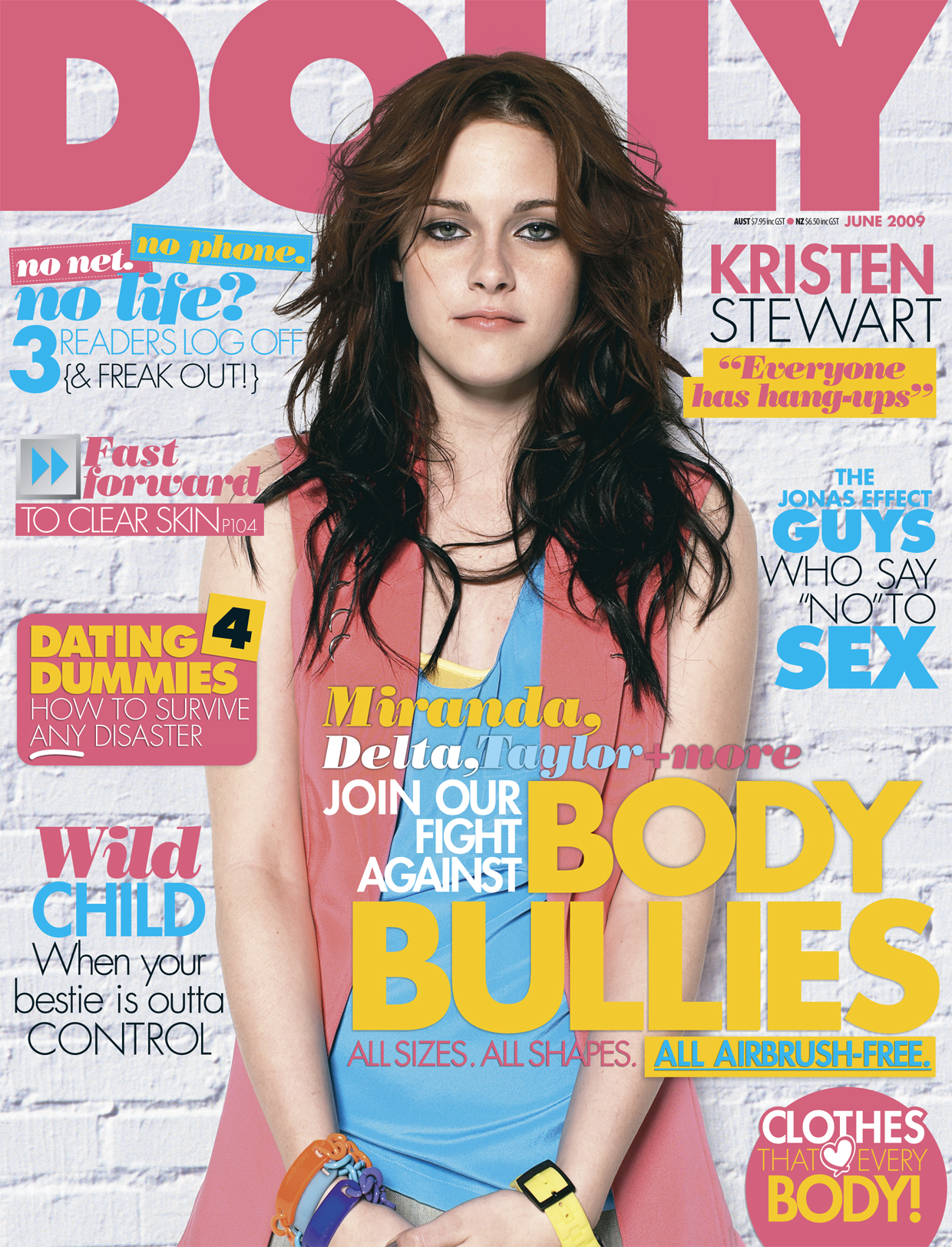
Australian Teen Magazine DOLLY Publishes "No Retouching" Issue


A teen magazine down under has just launched the "Heart Your Body" campaign, which includes an issue with non-airbrushed photos. Dolly editor Gemma Crisp appeared on Australia's Today show to discuss the campaign.

"Airbrushing in magazines is quite insidious, everyone does it...I'm really worried about girls looking at magazines and these so-called 'perfect' images." A survey conducted by Dolly revealed that four out of five of girls are unhappy with their bodies.

Of course not every image in the magazine, which hit newsstands May 13th, is free of retouching. The editor admits that they often get photos directly from publicists or photo agencies that have already been altered. And while Crisp discusses a series of before/after shots (including Jessica Alba in the Campari ad campaign), revealing how dramatically retouching can alter the shape of someone's body, she's reluctant to admit that Dolly has done any digital slim-downs in the past. She said most of their retouching has been limited to removing red-eye, bruises, and "patchy, fake tan." As part of this new campaign, which includes Kat Dennings and Taylor Swift, non-retouched images will be labeled throughout the magazine.

The campaign seems like a great idea, but they only showed one image from the magazine. It was difficult to see the bruise on actress Jessica Mauboy's arm or the red-eye that Crisp mentioned. And what about the cover? The "all airbrush-free" tagline refers to specific stars (not cover girl Kristen Stewart) and the article included with Today appearance says that "all the action starts on page 61," referring to "retouch-free zones." Did they leave Kristen Stewart alone? Because there is not a blemish or a bruise to be found, and the whites of her eyes are white as white can be.

When asked if this campaign would continue in future issues, Crisp responded: "Probably. Definitely."


"Dolly goes air-brush free" [Nine MSN]